Looking after solar
Cleaning and inspection intervals, pigeons, inverter life, insurance — and what to check when the app says output is low.
How do I stop pigeons nesting under my solar panels?
Fit bird-proofing mesh or clips around the edge of the array, ideally at installation or outside the nesting season. It is an offence to damage or…
Read the answer →02How often do solar panels need cleaning in the UK?
Most UK roof panels tilted at 15 degrees or more are largely kept clean by rain. The Energy Saving Trust suggests a clean every 12 to 18 months,…
Read the answer →03How do I clean solar panels safely without damaging them?
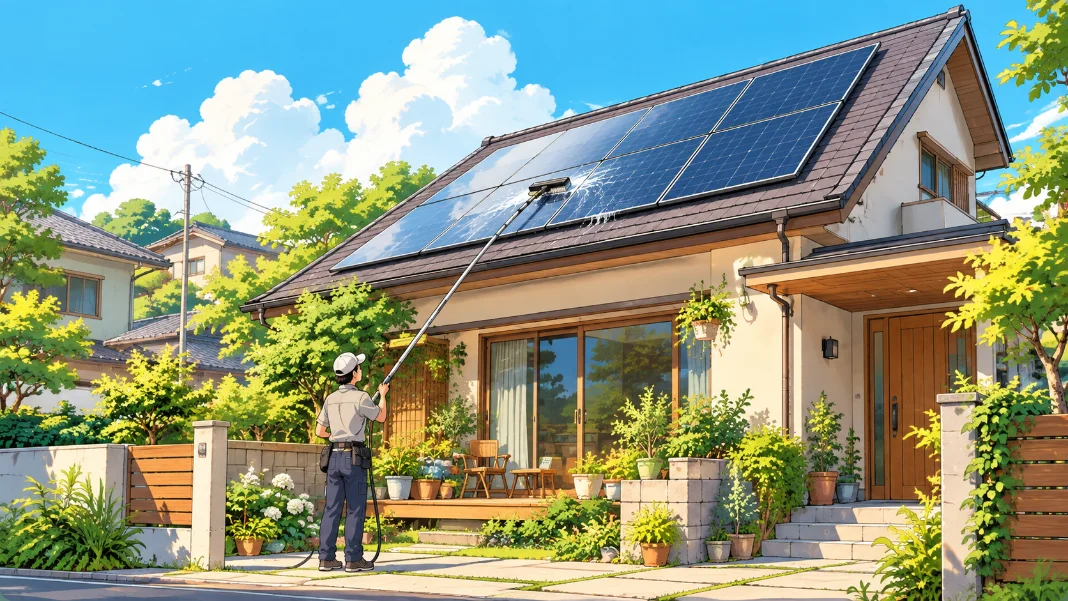
Clean from the ground with a soft long-handled brush and clean water or a mild biodegradable soap, on a cool day, and never stand on panels or use…
Read the answer →04What paperwork should I keep for my solar and battery system?
Keep the MCS certificate, electrical installation certificate, DNO G98 or G99 notification, building-control or competent-person notice, product…
Read the answer →05Are solar panels a fire risk, and what should be inspected?
Fires are rare, about 0.01% of UK installations in the BRE investigation, but most PV-caused fires started in DC isolators and connectors, usually…
Read the answer →06Can hail or storms damage solar panels, and who pays?
Certified panels are tested to survive 25 mm hailstones at 23 metres per second, so ordinary UK hail rarely breaks them. Large hail, flying debris…
Read the answer →07What are hot spots and PID, and is a thermal-imaging survey worth it?
Hot spots are cells running much hotter than their neighbours because of cracks, shading or failed bypass diodes; PID is voltage-driven leakage…
Read the answer →08How often should a solar PV system be inspected or serviced?
Plan a visual check yourself every few months via the app and from the ground, a professional inspection every one to two years, and a fuller…
Read the answer →09Do I need to tell my home insurer about solar panels or a battery, and what is an insurance-backed guarantee?
Yes: tell your buildings insurer before or straight after installation, because panels become part of the building and a battery is a material…
Read the answer →10How long does a solar inverter last and what does a replacement cost?
Expect to replace a string or hybrid inverter once during the life of the panels, typically after 10 to 15 years. The Energy Saving Trust puts a…
Read the answer →11What should I look for on my solar DC and AC isolators?
Look without opening them: the case should be intact, the switch clearly on or off, cable glands facing down or sideways, and no condensation,…
Read the answer →12What should my solar generation graph look like, and what do odd shapes mean?
A clear day on a south-facing roof gives a smooth bell curve peaking around 1pm. A flat top at the same kW every sunny day is inverter clipping.…
Read the answer →13What happens to my solar panels, FiT or SEG payments and warranties when I sell or buy a house?
Owned panels go with the house. A Feed-in Tariff transfers: the new owner sends the FiT supplier proof of ownership and ID. Export Guarantee…
Read the answer →14How much do solar panels degrade each year?
UK field studies measure roughly 0.5% to 1% output loss a year: a Sheffield Solar analysis of over 7,000 UK systems found about 0.8% a year, and a…
Read the answer →15How do I know if my solar system is underperforming?
Compare yearly or monthly kWh with the MCS performance estimate in your handover pack, not with the peak kW figure. In the UK a well-sited south…
Read the answer →16What is the difference between a panel's product warranty and its performance warranty, and what voids them?
The product warranty covers defects in the panel itself, typically 12 to 25 years. The performance warranty guarantees minimum output over 25 to…
Read the answer →17Can solar panels cause roof leaks, and what should I check?
Well-installed panels should not leak: hooks sit under the tiles and the roof covering stays intact. Leaks usually come from cracked or lifted…
Read the answer →18Are 'self-cleaning' or anti-soiling solar panels really self-cleaning?
No panel is fully self-cleaning. Rain on tilted glass removes most dust, and some modules have anti-reflective or hydrophobic coatings that help…
Read the answer →19What should I do about snow or frost on my solar panels?
Nothing, usually. Frost clears within hours of sunrise and snow slides off tilted glass as it warms. Winter output is small anyway, so the lost…
Read the answer →20How much generation do I lose if my panels are dirty?
In a rainy climate like the UK, typical dirt costs a few percent a year, not tens of percent. A European study found average soiling losses of…
Read the answer →